• DEFY INDIFFERENCE • THE PRODUCT LAUNCH STUDIO • DEFY INDIFFERENCE • THE PRODUCT LAUNCH STUDIO • DEFY INDIFFERENCE • THE PRODUCT LAUNCH STUDIO • DEFY INDIFFERENCE • THE PRODUCT LAUNCH STUDIO • DEFY INDIFFERENCE • THE PRODUCT LAUNCH STUDIO • DEFY INDIFFERENCE • THE PRODUCT LAUNCH STUDIO • DEFY INDIFFERENCE • THE PRODUCT LAUNCH STUDIO • DEFY INDIFFERENCE • THE PRODUCT LAUNCH STUDIO • DEFY INDIFFERENCE • THE PRODUCT LAUNCH STUDIO • DEFY INDIFFERENCE • THE PRODUCT LAUNCH STUDIO • DEFY INDIFFERENCE • THE PRODUCT LAUNCH STUDIO • DEFY INDIFFERENCE • THE PRODUCT LAUNCH STUDIO
Oura started as a Kickstarter campaign in Finland that almost nobody noticed. Today they're worth $11 billion — and they're launching Ring 5 right now. Their product launches run five distinct creative systems simultaneously. Here's how they got there, and what's inside the machine.
One Thing.
The origin story.
Oura didn't start as a category. It started as three engineers in Oulu, Finland with a Nokia pedigree and a hunch about sleep.
The company was originally called Jouzen. They ran a Kickstarter in 2015, raised $650K, six times their goal, and shipped the first ring to a few thousand early believers. Then almost nothing happened. For five years, Oura was a niche sleep tracker for biohackers. The kind of product that showed up in Reddit threads and wellness podcasts and almost nowhere else. Nobody outside that circle cared.
That patience is the part of the story nobody talks about.
The moment everything changed.
Oura didn't plan to become the NBA's secret weapon. It just happened to make a ring that could detect a fever.
In March 2020, the league was trying to figure out how to finish a season in the middle of a pandemic. They needed something on the body, something passive, something players would actually wear. Oura fit the brief. More than 2,000 rings were ordered overnight. The company that had spent five years selling to biohackers was suddenly on the wrists of the most watched athletes in the world.
Sales doubled that year. Then doubled again.
The Series B followed. Then C. Then D. Each round larger than the last, each one a signal that the market had finally caught up to what Oura had been building. Half a million rings sold in 2021. A million in 2022. Gen 3 launched with a subscription model that turned a hardware sale into recurring revenue. Gen 4 dropped in October 2024 — the first fully circular titanium design, the one that finally looked like jewelry instead of a gadget.
By 2025 the valuation had reached $11 billion. Revenue crossed $1 billion. Team USA was wearing the ring at the Olympics.
And this week, Ring 5.

What their creative looked like in the past.
Animated creative for launch website.
The website itself is a launch asset.
Most brands treat their product page as a place to list specs and drop a buy button. Oura treats it as a third creative surface — something between a film and a store.
The Ring 4 product page is built around a scrollytelling structure. A vertical timeline runs down the left rail — 6:00 AM, 12:00 PM, 3:00 PM, 6:00 PM, 10:00 PM. As you scroll, you move through a full day with Oura in it. Each moment has its own lifestyle film playing behind the content. A real person, a real environment, warm natural light. Floating on top of that footage are live UI cards: a Readiness score, a sleep stage breakdown, a heart rate graph, a push notification from the app. The data feels like it's happening in real time, not sitting in a screenshot.
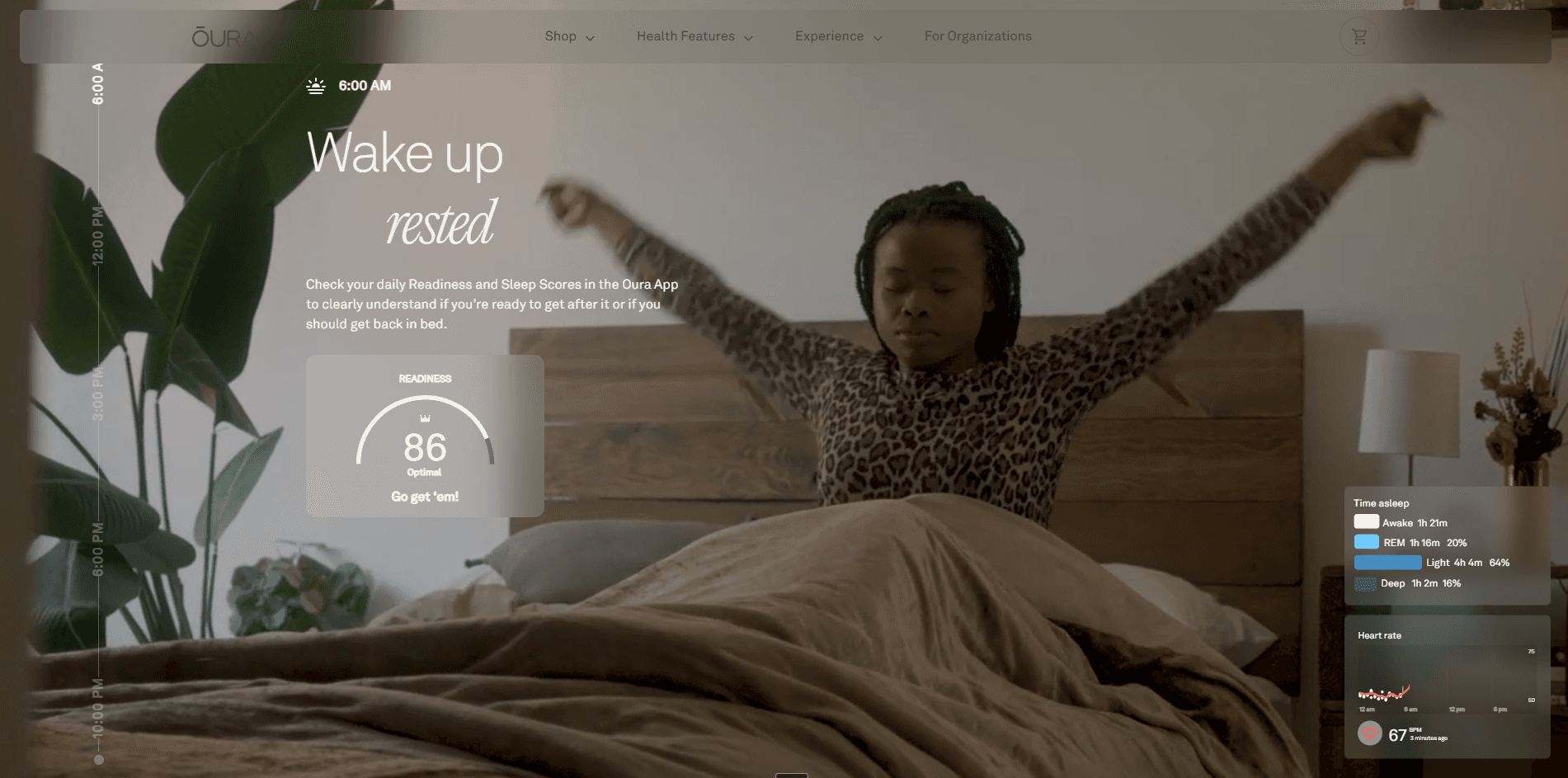
The typography mixes a clean serif with an italic script "Wake up rested." "Ready, set, get going." Each headline is two words of intention and one word of emotion. The page background tint shifts with the time of day. Cool morning light at 6 AM. Warm amber by noon.
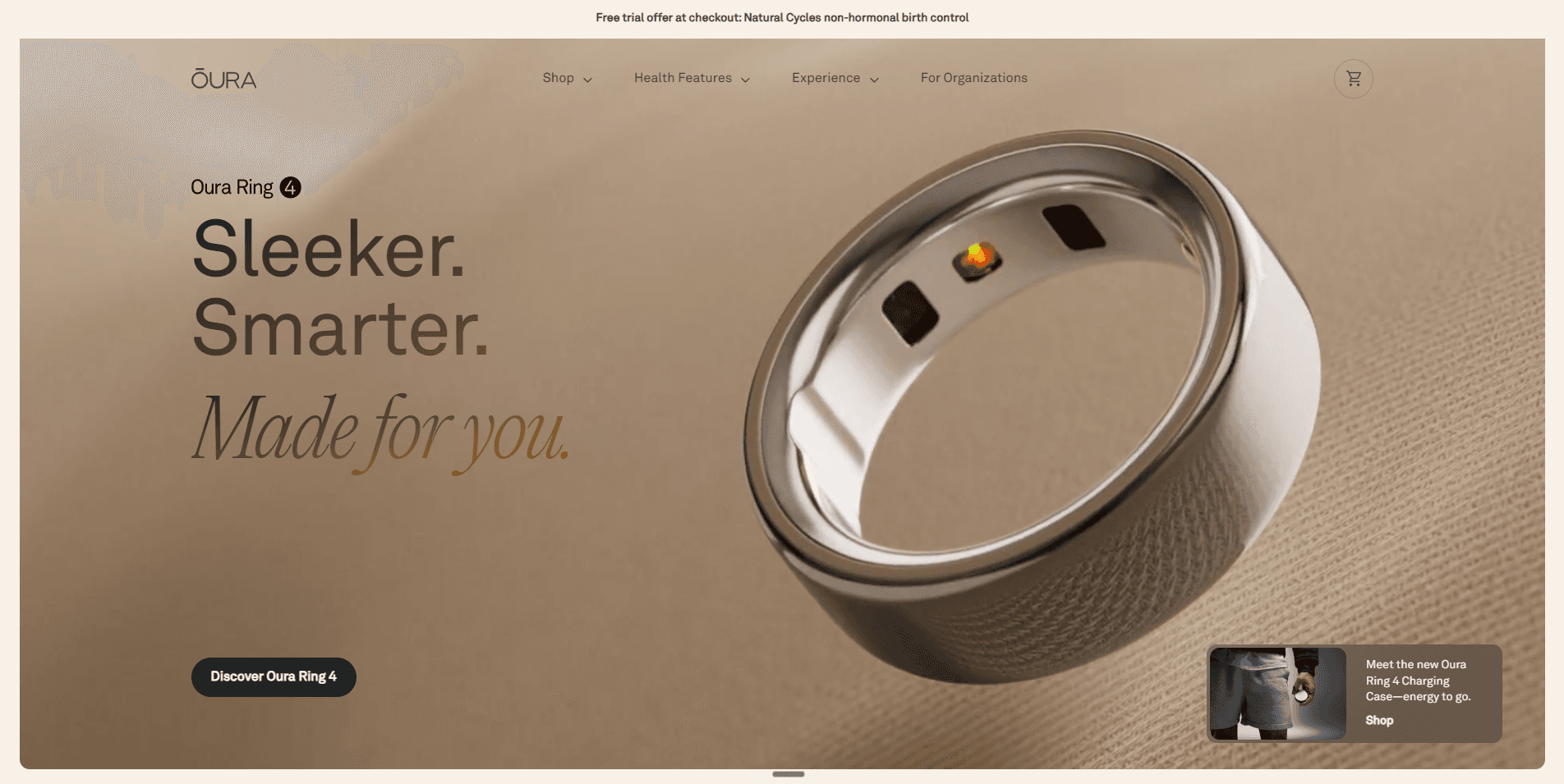
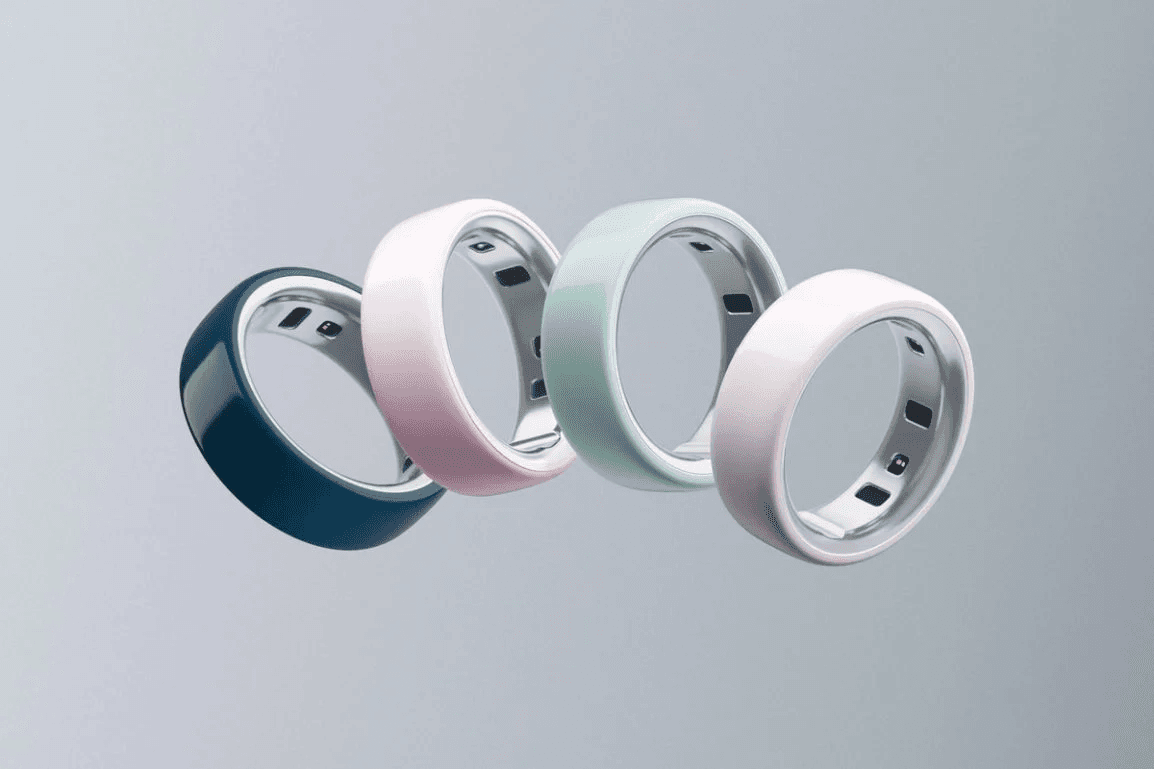
Alongside the scrollytelling experience, the product pages run animated product loops for every finish. Each colorway gets its own 10-second 3D loop, the ring rotating slowly on a color-matched seamless background, camera pushing in toward the sensor cavity, then pulling back to a clean hero position.
Cloud on cream. Tide on mint. Petal on lavender. Midnight on deep blue.
The background isn't neutral. It is the ring.
The whole frame becomes the colorway.
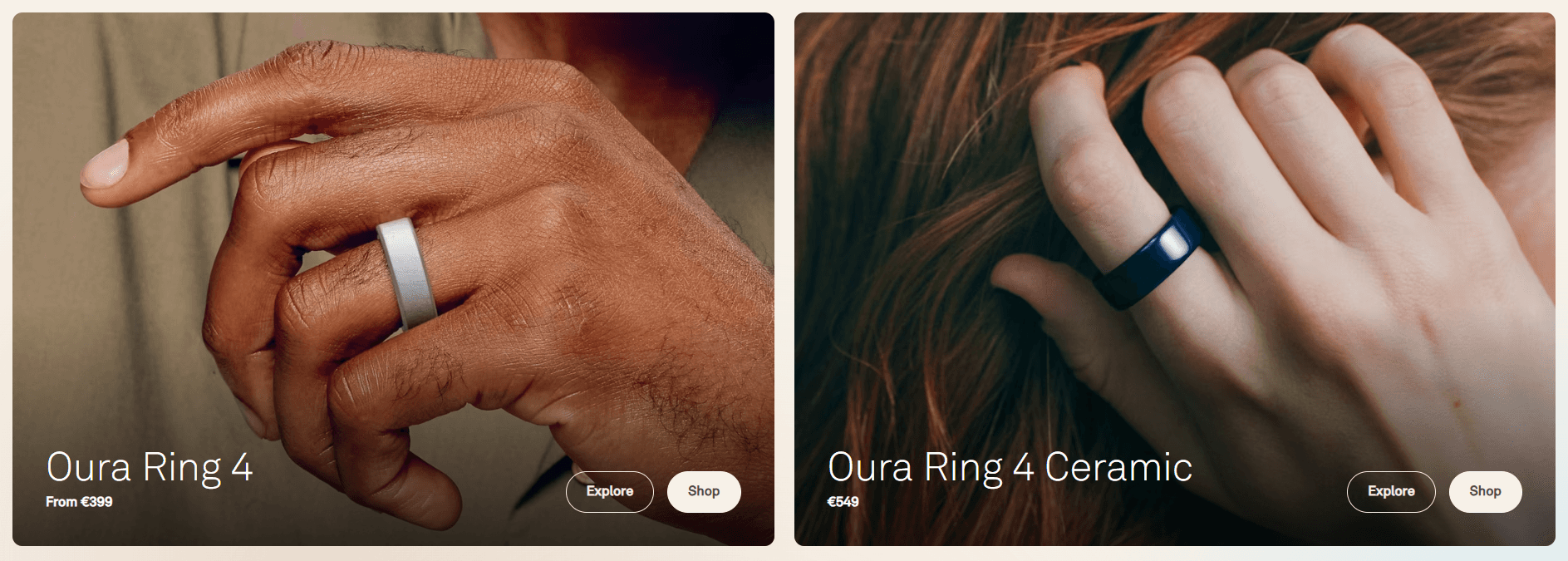
The metal finishes. Stealth, Black, Gold, Rose Gold, Silver, get something different. Static key visuals, wide format, editorial. Gold on rumpled silk. Stealth suspended between two cracked marble slabs. Rose Gold resting on suede. Each finish gets its own world, built to amplify its personality. These aren't product photos. They're art direction decisions.
There's also this epic x-ray shot. A 4-second 3D animation that renders the ring with a fully transparent shell, circuit board, sensor array, LEDs glowing inside the cavity. No text. No labels. Just the engineering, visible through the titanium. The skeptic's answer, rendered in glass.
Then there's the charging case. A short looping video shows the ring dropping into place. Magnetic, satisfying, the kind of detail that makes a $350 purchase feel justified. Industrial design as reassurance.

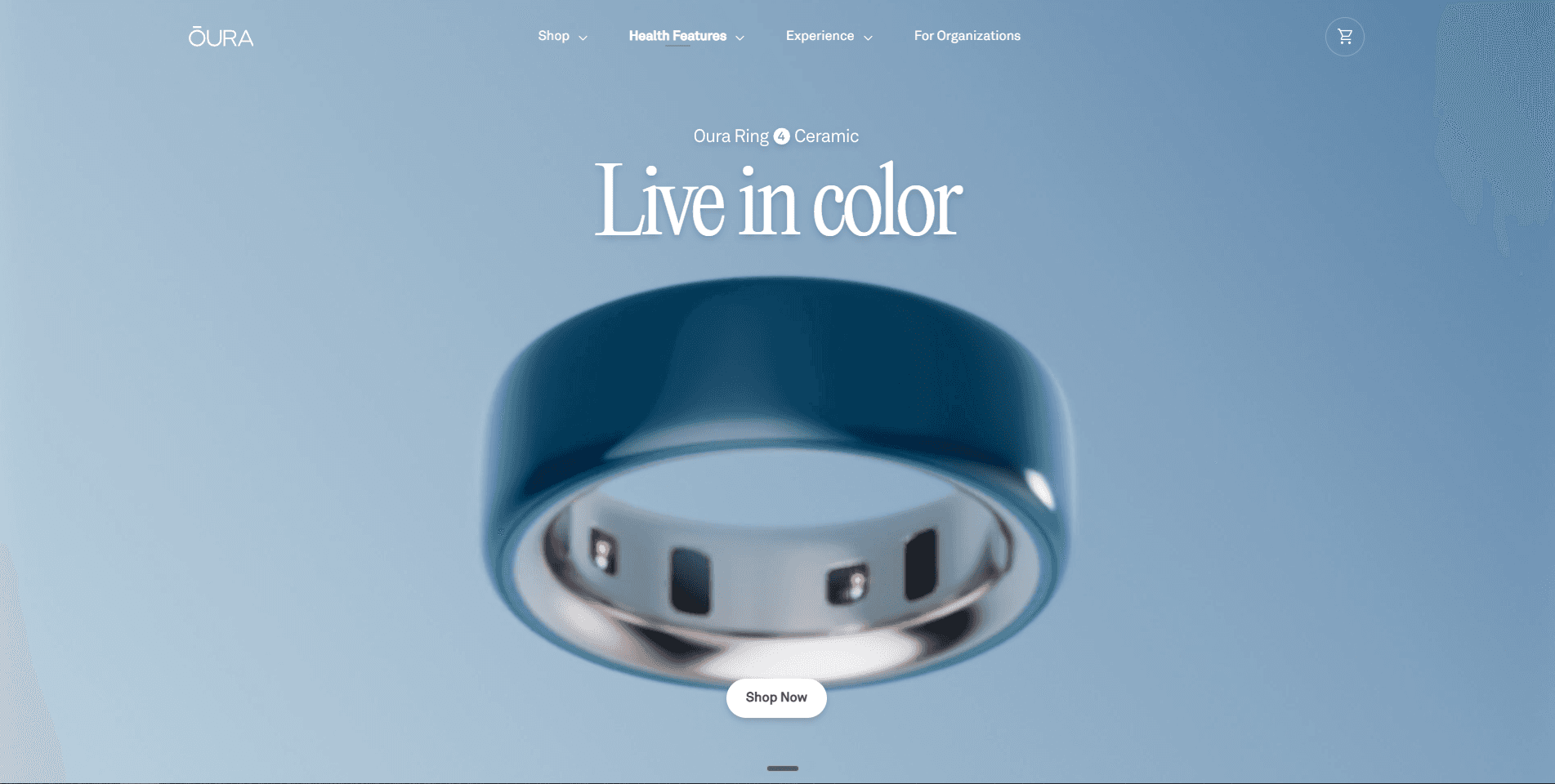
"Live in color", a dedicated web header, rendered in CG, a hero shot of the Tide colorway in full ceramic blue, the ring floating center frame like it belongs in a museum case. Not a product page. A statement.
YouTube
Shot on location, real light, real environments, this is live-action lifestyle filmmaking at a professional level. Most of these shots could be replicated today using AI-generated video for the environmental scenes and a real ring for close-ups, bringing the production cost down significantly without losing the visual register.
The Olympics Partnership.
Five rings. Five Olympic rings. The overlap was too good to ignore, and Oura didn't oversell it. A clean, fully 3D animated spot — bold colors, simple motion, nothing explained. Just the visual logic doing the work.
Meta Ads Strategy
Scroll through Oura's Meta Ad Library and the volume alone tells you something. Dozens of active ads running simultaneously, many with multiple versions, some in market since late 2025. This isn't burst spending around a launch. It's a permanent paid media presence.

The strategy splits three ways. Cinematic 3D world-building ads doing brand work — the same assets we've been talking about, now with a Shop Now button attached. Offer-led conversion ads for specific audiences: students, teachers, healthcare workers, first responders, HSA/FSA eligible buyers. And audience-specific copy that reframes the same product around completely different problems; perimenopause, birth control, sleep, recovery, energy. Same ring. Twenty different conversations.
Animated
Meta Ads
![]() | ![]() | ![]() |
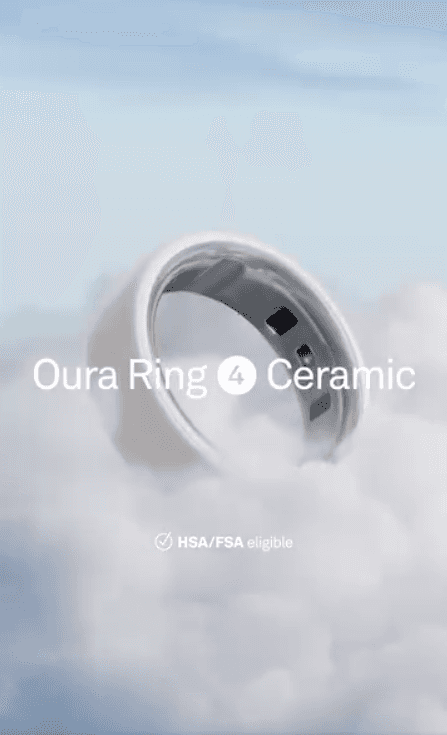
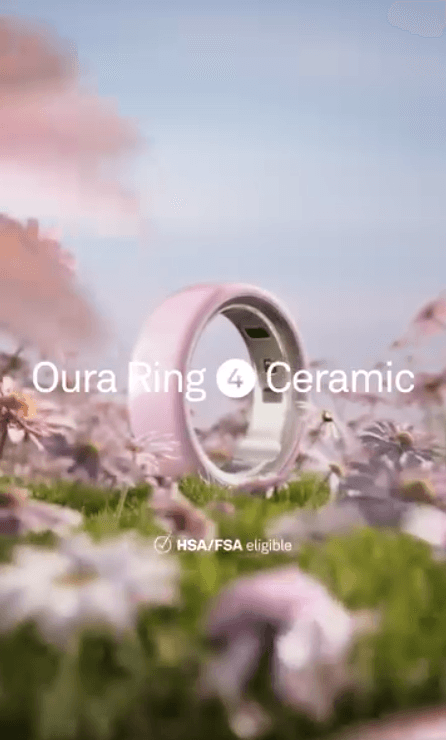
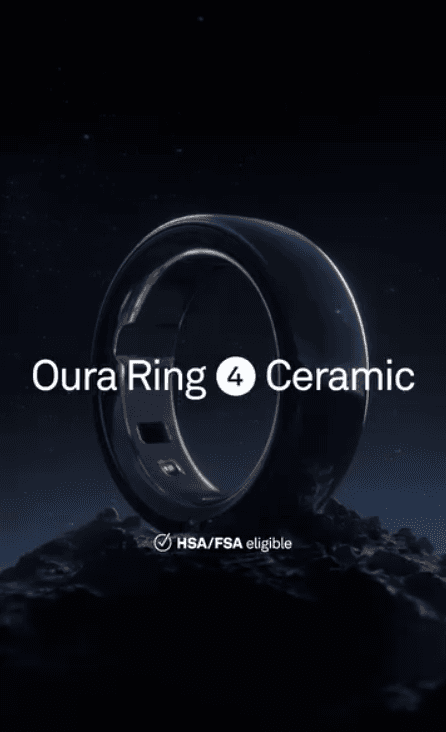
On Meta, the ring lives in its own world, literally. Cinematic 3D animations place each ceramic colorway inside an environment built around it. Cloud ceramic floating above actual clouds. Petal ceramic in a field of pink flowers. Midnight on a rocky mountaintop under stars. 15 seconds. 9:16. A conversion badge quietly sitting at the bottom, HSA/FSA eligible. Brand-quality creative doing performance work. Most brands separate those two briefs. Oura runs them as one.
OOH

Here is what OURA launched today. Ring 5.
Hero films
The Conductor.
A completely separate film. No 3D, no spec callouts, no feature list. Just a female conductor and a full orchestra, shot in warm amber light with the kind of cinematic restraint you'd expect from a fashion house, not a health tech company. The ring is barely visible, a silver detail on her finger as she raises her hand to bring the orchestra in. The whole film builds to a single wide shot of the concert hall, the audience seated in the dark, "Oura Ring 5" projected on the stage behind the orchestra like a performance credit.
It's the emotional film. The one doing the job the spec film couldn't.
Oura shipped two hero films for Ring 5 with two completely different briefs. The first answers the rational brain; here's what the ring does, here's the proof. The Conductor answers the emotional brain; here's what it feels like to be someone who wears one.
Together they cover every type of buyer in the room. That's the strategy.
The Ring 5 hero film.
It sits in an interesting place emotionally. It's cold enough to feel like serious technology, the grey seamless backgrounds, the clinical 3D renders, the sensor macro shots. But then a mantis crawls across a rock. There are forests. There are hands. There's a desert sky at night.
Oura keeps pulling the film back toward the living world, almost like it doesn't want you to forget there's a human on the other end of all this engineering. It works visually. The problem is it never quite commits either way. It doesn't go full Apple-cold, and it doesn't go full lifestyle-warm. It lives in the middle, which is technically impressive but emotionally safe.
You watch it and think "that looks great." You don't watch it and think "I need that." For a ring that's 40% smaller and lasts a week, there was probably a more visceral story to tell. They just didn't tell it here.
Tech explainer
The hero film gets you interested. The website closes you.
Oura's Ring 5 product page does exactly what their Ring 4 page did, turns the website into a second film. A scrollytelling experience that walks you through every technical detail of the ring without ever feeling like a spec sheet. You scroll and the story unfolds. Sensor upgrades, size comparison, materials, health features, battery life. Each section gets its own visual moment, a render, a diagram, a lifestyle shot, a data visualization. By the time you hit the buy button you feel like you already know the product. Not because you read about it. Because you experienced it.
It's a smart division of labor. The hero film's job is emotional entry, make you feel something, make you curious, make you click. The website's job is rational conversion, answer every question, remove every objection, make the purchase feel inevitable. Most brands blur those two jobs and end up doing neither well. Oura keeps them completely separate, gives each surface its own creative logic, and lets them do their jobs without getting in each other's way.
The hero pulls you in. The scrollytale closes you out.
Key visuals


Paid Ads
No Meta Ads have been published at this time.
What this means for your next launch and what you can steal.
1. Make your website a third creative surface.
Not a spec sheet. Not a store. A film you scroll through. The scrollytelling structure costs nothing conceptually, it's a decision, not a budget.
2. Color-match everything to the product.
The ceramic loops flood the entire frame with the ring's color. Background, lighting, mood, all of it becomes the colorway. One decision that makes every asset feel considered.
3. Give every finish its own world.
Gold gets silk. Stealth gets marble. Rose Gold gets suede. Each material tells a story about the person wearing it. You don't need five SKUs to do this, even two variants deserve two different visual environments.
4. Run brand creative and performance creative as one brief.
The Meta ads are cinematic 3D world-building with an HSA/FSA badge at the bottom. Most brands split that into two separate workstreams. Oura runs them as one asset.
5. Show the engineering without explaining it.
The x-ray film. No labels, no voiceover, no feature callouts. Just the circuit board glowing through the titanium. Trust the viewer to believe that something magical is happening inside.
6. Find your NBA bubble moment.
Oura didn't manufacture their breakthrough, they were ready when it arrived. The product worked. The timing was lucky. But seven years of patience meant they had something worth discovering.
7. Separate your hero film from your design film.
One film does the emotional work. Another does the product work. They don't have to be the same piece. Oura consistently ships both, and they never feel like they came from different briefs.
8. Use co-marketing to borrow cultural context.
The Olympics wasn't a sponsorship play. It was a visual argument, five rings, their ring, no explanation needed. Find the cultural reference that makes your product's purpose obvious without saying it.
9. Build the charging case its own film.
An accessory. They gave it a standalone campaign with sound design and a day-in-the-life structure. Every touchpoint in the product experience is a launch moment if you treat it like one.
10. Be patient before you spend.
Oura didn't do Buck-level work in 2018. They waited until the brand, the valuation, and the moment were aligned. The most expensive mistake in a launch is doing premium creative before you know what you're saying.